Egyptian Cuisine: 7 surprising things for first time travelers
What is Egyptian food like? Before heading to Egypt for the first time you might want to know what to expect. Egyptian cuisine is generally Mediterranean / Middle-Eastern in style, but it is also quite unique, with its own dishes, quirks, and history.
The first thing you should know about food in Egyptian culture is that bread is life! The word for bread in Egyptian Arabic is the same as the word for life: Aish. So that tells you how important bread is to Egyptians.
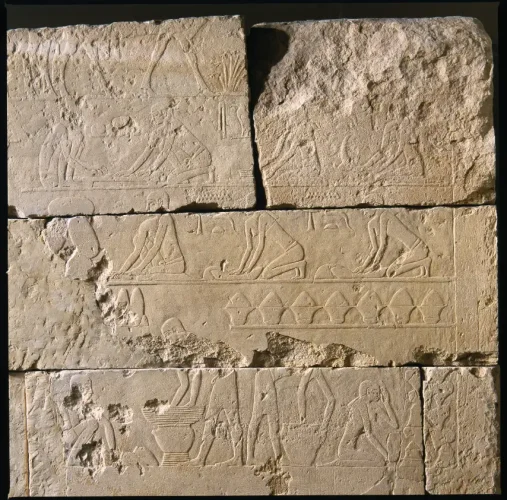
And this is no surprise coming from the descendants of the pharaohs. In Ancient Egypt bread was used as a form of wage payment and bread (along with beer) were the quintessential offerings to the gods and ancestors, and the offerings everyone wanted left at their tomb to sustain them in the afterlife. See this example of an offering table with images of bread and beer inscribed on it, or the tomb wall relief below.
Metropolitan Museum of Art 08.201.1c. A wall relief from the tomb of Rekhmire shows images of brewing and baking to supply the deceased in the afterlife.
Luckily bread in Egypt is delicious! There are two kinds of Egyptian bread you have to try:
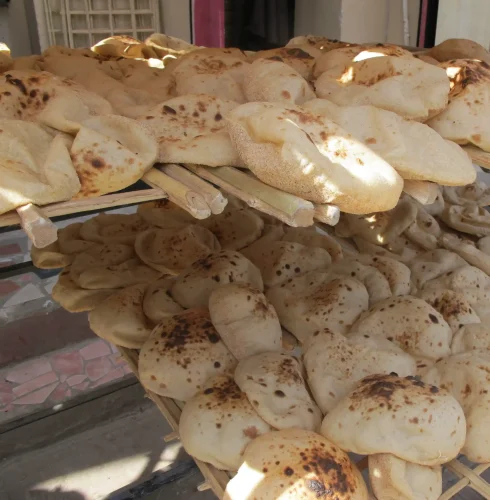
Aish Balady (meaning Country bread), which is a thick pita bread made out of whole grain wheat and finished with wheat bran on one side. When it comes out of the ovens it is puffed up like a blowfish and as it cools it becomes the expected round pita bread. This is the basis for breakfast sandwiches of beans, Tameya (like falafel), eggs, available from street carts and small kiosks throughout the country.
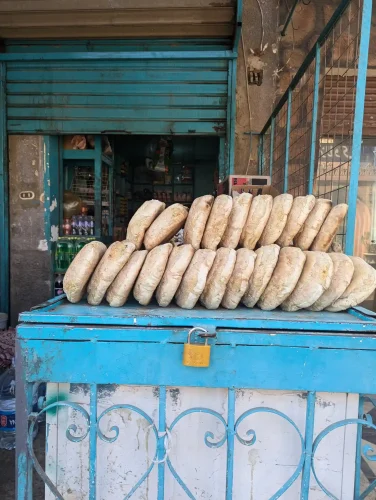
Freshly baked, pillowy Egyptian Aish Baladi cools on tiered wooden racks outside a traditional street bakery.
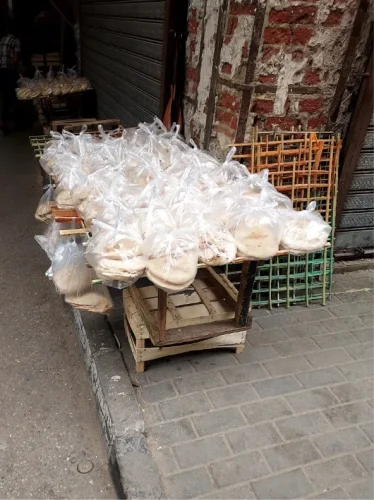
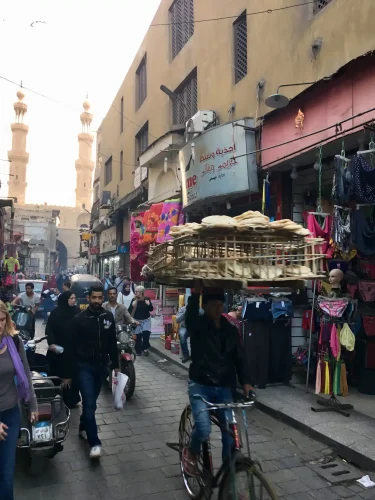
You can pick this up by the bag on street corners in the morning and if you are a traveler/visiting, most hotels serve it with their meals. Also keep an eye out in Cairo for the amazing bicyclists who navigate the (crazy!) Cairo traffic while carrying a tray of Aish balady bread on their heads.
Egyptian Balady bread is often sold on street corners packaged fresh from the bakery in bags and ready to go.
One of the most impressive sights in Cairo: the cyclists who dodge traffic as they balance large trays of bread on their heads
If you are going to Luxor or Aswan be sure to also try Aish Shams, Sun bread. This is a loaf-type bread named because it sits in the sun to rise. Found more commonly in Upper Egypt (southern Egypt) it is thick kind of like a sourdough, and is really great with jam or cheese (or anything really).
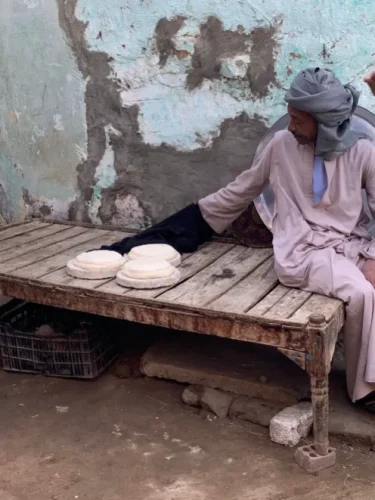
Aish Shams, Sun bread, is found commonly in upper Egypt, here in a shop in Esna.
Aish Shams is made traditionally, by setting it out in the sun to rise before baking.
Bread is served at every meal, but it is not alone in terms of carbs- often lunches and dinner will involve 3 or 4 carbs! An orzo soup (pasta), followed by rice, potatoes and of course bread on the side is quite common. I mean this is the country where I first found out that a french-fry sandwich is a thing. You will never be short of energy for climbing into pyramids or up minarets as you explore the sites.
2-Egypt is a tea culture, not a coffee culture
If bread is life, tea is king.
Perhaps even more important than bread in Egyptian cuisine, and really in Egyptian social life, is tea. Egyptians drink tea morning noon and night, and any time in between. Tea is not only a good way to wake up, but also a sweet treat, and a reason to take a short break. But most importantly it is a way to be social and hospitable.
Almost every vendor will invite you into their shop to have tea. Friends will sip tea long into the night, often while enjoying a shisha (hookah).
Tea (shai) in Egypt is most commonly a black tea, and most Egyptians prefer to have their tea sweet, adding spoonfulls of sugar to small cups. You can also order fresh mint or lemon to go with your tea.
And if you are not a caffeine drinker, Karkade is a deep red hibiscus tea made from flowers grown in Egypt. It tastes a bit like cranberry and can be served hot or cold.
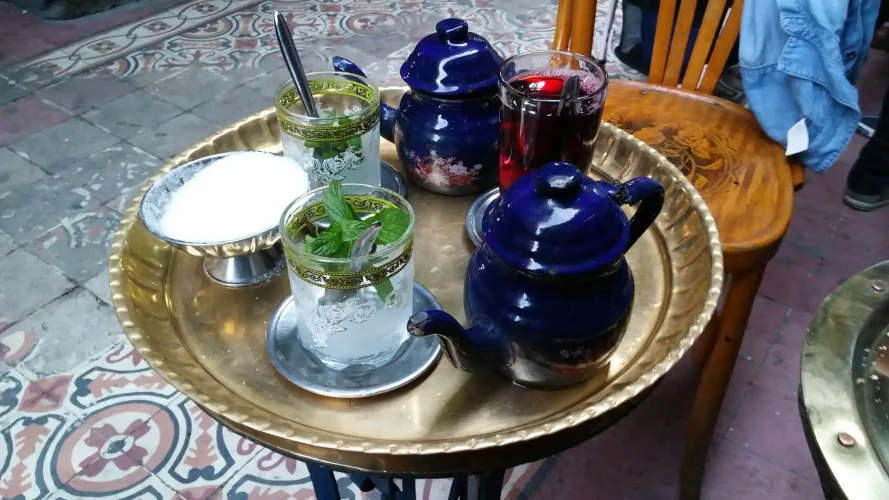
Two pots of Egyptian black tea ready to be poured into cups with mint, and a sugar bowl stands by, along with a cup of red karkade tea.
Project manager Hazem and I enjoying the classic Egyptian pairing of tea and shisha (tobacco in a hookah) while hanging out one night at a cafe in Luxor.
You can get tea anywhere in Egypt. In the markets you will see people bringing tea around to all the vendors, and there are street vendors for tea. You can even get tea out in the middle of the desert!
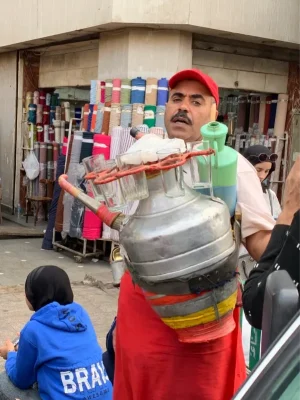
A traditional tea vendor walks around in Cairo ready to serve tea to anyone in need of a pick-me-up or a mid-day treat.
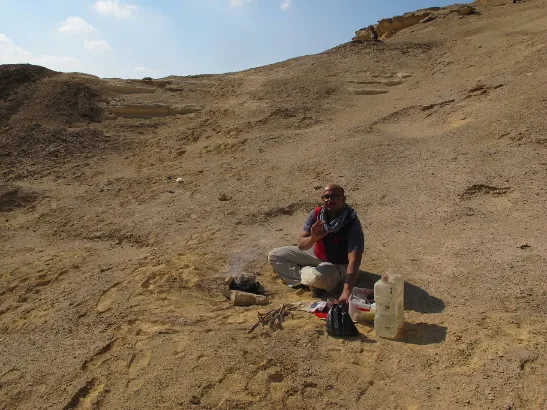
Even when exploring the remote desert for archaeological sites, our Egyptian team mebers would always bring wood or a small gas stove so they could boil water for tea!
So if you are a tea drinker you will be in heaven. If you are a coffee drinker… well, maybe its time to be come a tea drinker.
In Cairo there are now many coffee shops with Espresso drinks- Vascos in garden city is great, and there are even some Starbucks around here and there for better or worse. The Korba neighborhood in Heliopolis is a neighborhood packed with coffee shops, as is Zamalek.
But at a lot of places the coffee is often, brace yourself, instant coffee. Especially in the south. So mentally prepare yourself.
But remember when you are in Egypt, beready to drink a lot of tea!
3-In Egypt the falafel is taameya!
When most Americans think of middle eastern food, Falafel is one of the delicious foods that often comes to mind. But in Egypt the “falafel” is made out of fava beans instead of chickpeas, and is called Taameya. There is a lively debate among countries which is better. The Egyptian restaurant Zooba won best Falafel in a 2016 competition in London with its Taameya. You will just have to go and decide for yourself!
We could easily see that although there would be a stray artifact here and there (like the scraper I show in the video), the artifacts were very clearly concentrated around the rock art panels, likely due to the actions of ancient people rather than nature.
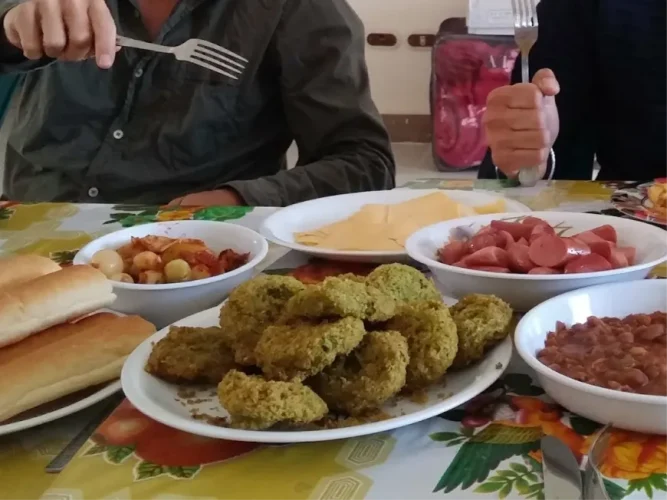
A large stack of taameya part of an breakfast spread. and two archaeologists ready to dig in.
The other surprising thing about Taameya is that it is a breakfast food! Egyptians eat it in the mornings, often in balady bread with tomatoes, cucumbers, and Tahina. Travelers will see it as an option at hotel breakfasts.
Its hard to describe taste, but I can describe people’s reaction. On excavations we usually just have a really light breakfast around 5 or 6 am because we start so early then break for breakfast around 9. Whenever we show up to the tent or dining room and see its Taameya day, believe me there are cheers all around!
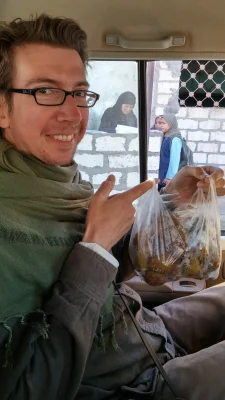
A fellow archaeologist is very happy with our score of a large bag of Taameya for breakfast while we worked in in the Minya area.
4-There's no hummus!
Another surprise for first time travelers about Egyptian food is that there is no hummus! Instead, in Egypt they have a similar dish called tahina where in other middle eastern countries you might have hummus.
Tahina is a dip made from tahini (ground sesame paste) often with lemon, garlic, and some olive oil added. So it is basically like hummus but without the garbanzo beans. It is often served as a dip (or ‘salata’) before or with your meal at dinner, or added into your pita sandwich (like with taameya).
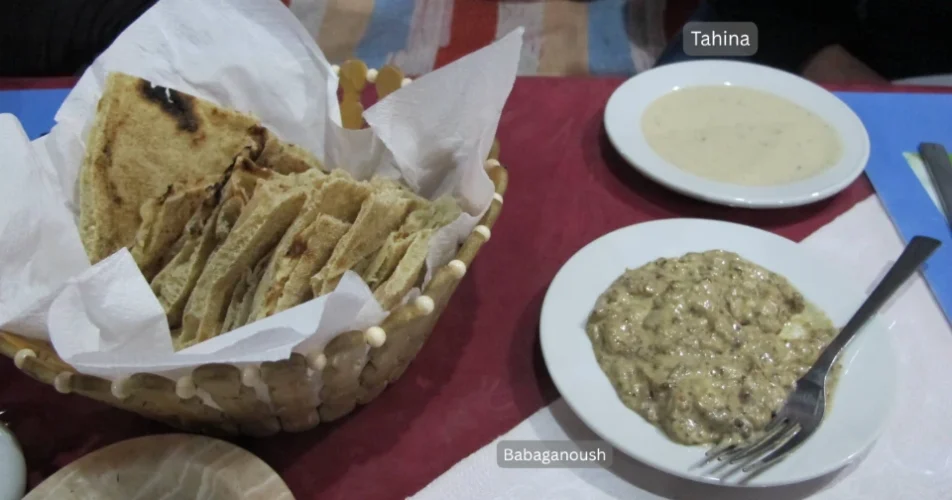
Creamy tahina dip and babagaoush (an eggplant tip) along with balady bread are typically accompany many dinners in Egypt.
Of course, you can find hummus occasionally at Lebanese restaurants and I am starting to see it in more restaurants these days, but it is not really a traditional Egyptian food.
So if you were planning to gorge yourself on Hummus during your trip, just expect to try some other dips instead: Like tahina , babaganoug (an eggplant dip), Bessara (mashed beans with herbs) or Labnah (a yogurt dip).
5- Is Egyptian food spicy?
Whether you are looking for spicy food or looking to avoid it, most first time travelers to Egypt want to know if Egyptian food is spicy?
The answer is: For the most part no… with a couple exceptions.
By and large most Egyptian food is not spicy at all. So if you are not a fan of heat, don’t worry you will be fine. But there are a couple exceptions, so if you like spicy food, look out for these, if you don’t, stay away.
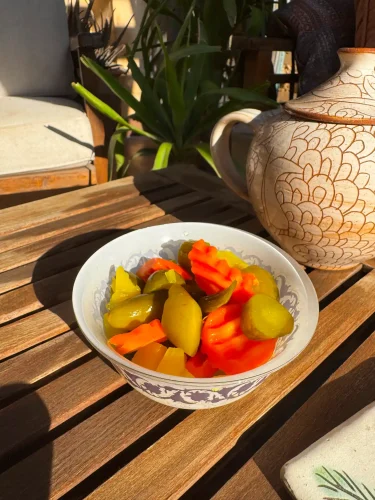
Torshi is a side-dish of pickled vegetables that can often be quite spicy. It usually contains turnips, carrots, olives, cabbage, even lemons and onions. You can add it into your other dishes or eat it by itself. It has a very unique taste, people tend to love it or hate it.
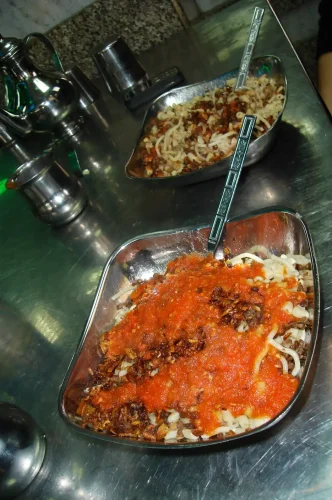
Koshari is an Egyptian dish that is kind of like spaghetti, if you also added in rice, lentils, garbanzo beans, and fried onions. I think of it like super spaghetti. Koshari usually comes with some optional extra sauces, a lemon-garlic one and a spicy sauce. It can be pretty spicy especially if you add a lot!
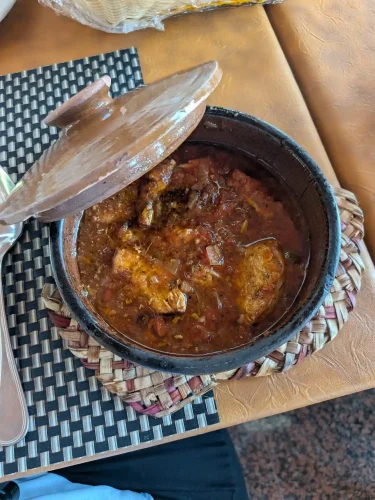
Nubian Tagines- In the south, near Aswan, some of the Nubian dishes add a bit of heat, especially the tagines- meat and vegetables stews cooked in clay pots. It is not so spicy that it will burn your face off but, can have a nice kick.
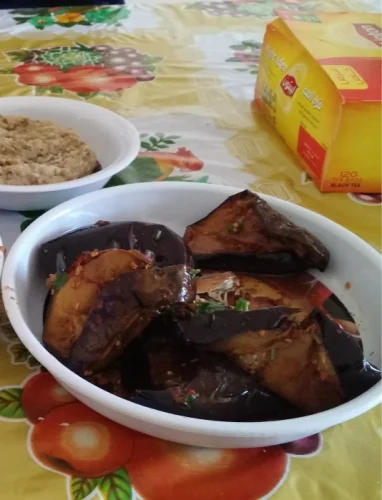
The last exception to Egypt’s otherwise mild food is that occasionally you will get a garlic dish that is so garlicy it is practically spicy. Look out for certain eggplant dishes that lay the garlic on thick!
6- Egyptian cuisine is not shy of oil
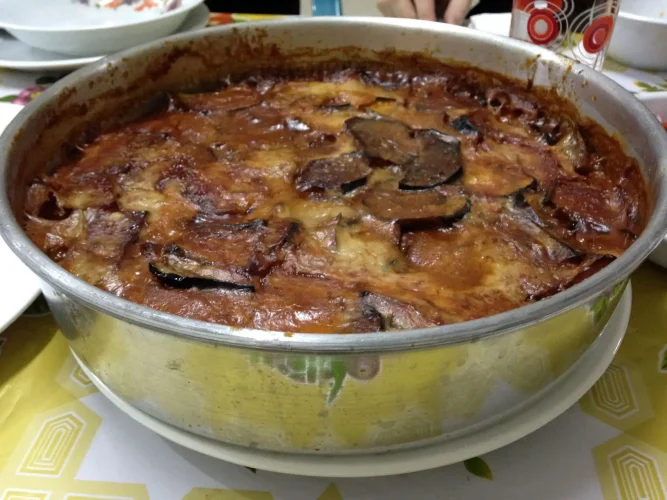
A surprise for many travelers is that Egyptian dishes, especially casserole-type dishes, like moussaka are delicious, but can be heavy on the oil. I’m just adding this here because if you are not used to it, your stomach might give you a surprise. You might think you have mummy tummy, when really its just the oil. It is good to know so if you are sensitive to oil you can choose your food wisely.
Egyptian Moussaka a casserole-type dish made with eggplant.
7- It is easy to be vegetarian in Egypt!
And the last surprising thing is that Egyptian vegetarian food is easy to find. So many dishes are just vegetarian normally, e.g. theTaameya, Koshari, and tahina I talked about above, but there are a lot of other vegetarian dishes in Egypt. You have to try lentil soup in Egypt, in my opinion it is the best of anywhere. Most lunches and dinners will be served with vegetables stewed in tomato sauce: Spinach, peas and carrots, potatoes, and okra, are all typical Egyptian dishes.
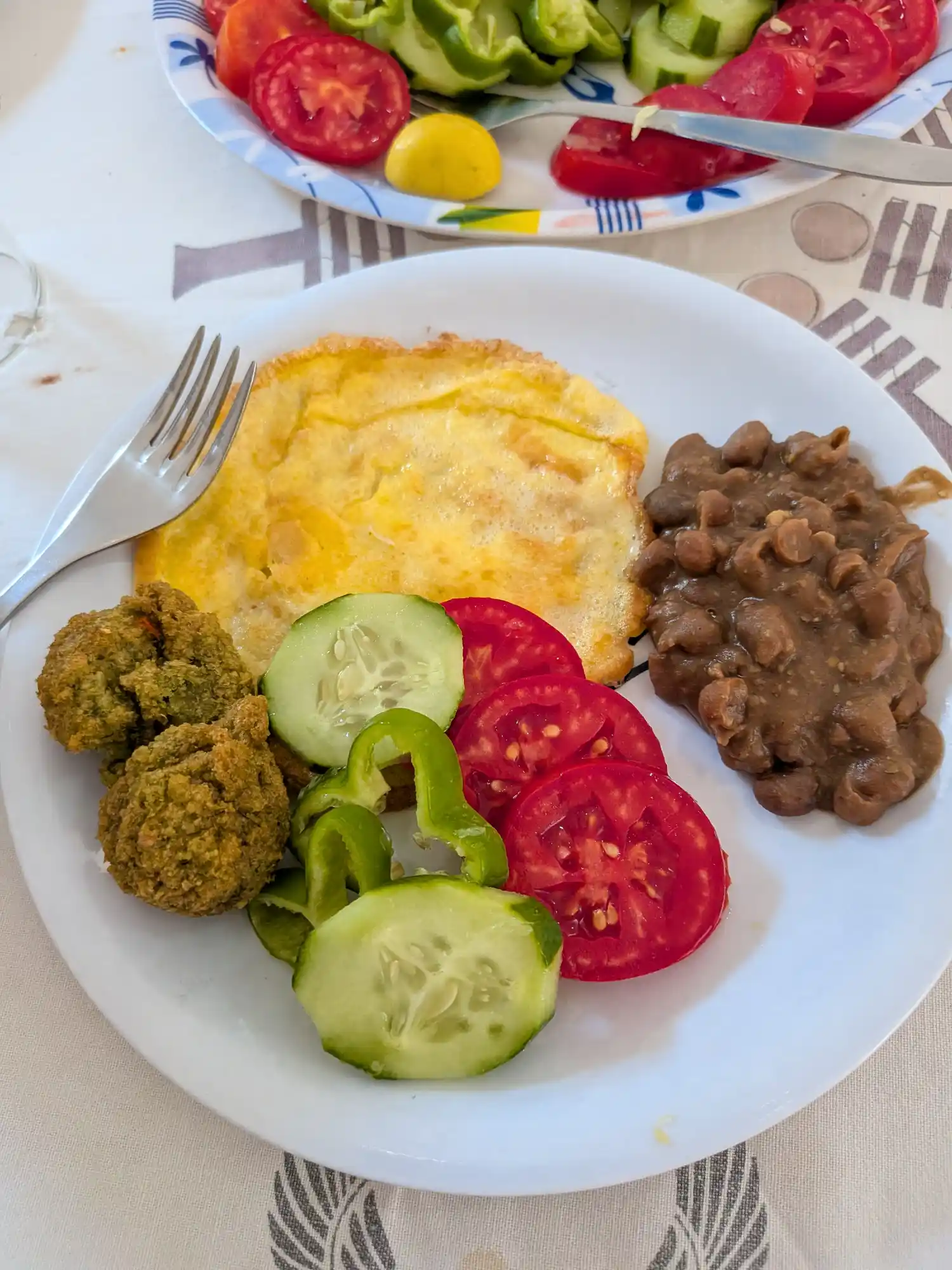
Egyptian vegetarian breakfast of eggs, beans, taameya, tomatoes and cucumbers
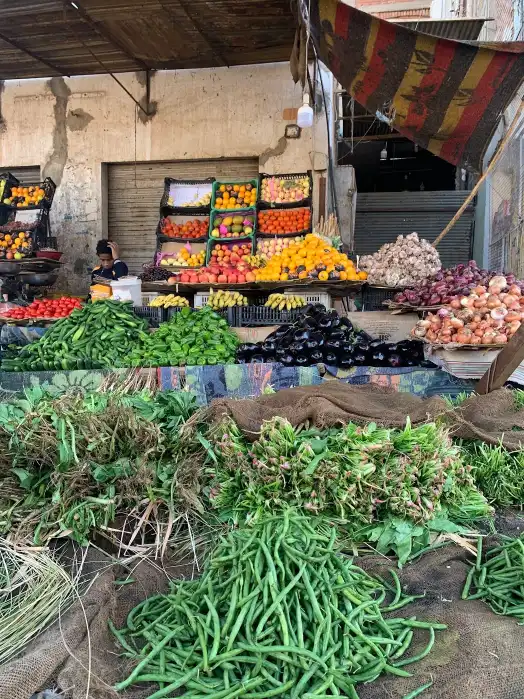
Local Egyptian market stand in Upper Egypt full of fresh fruits and veggies
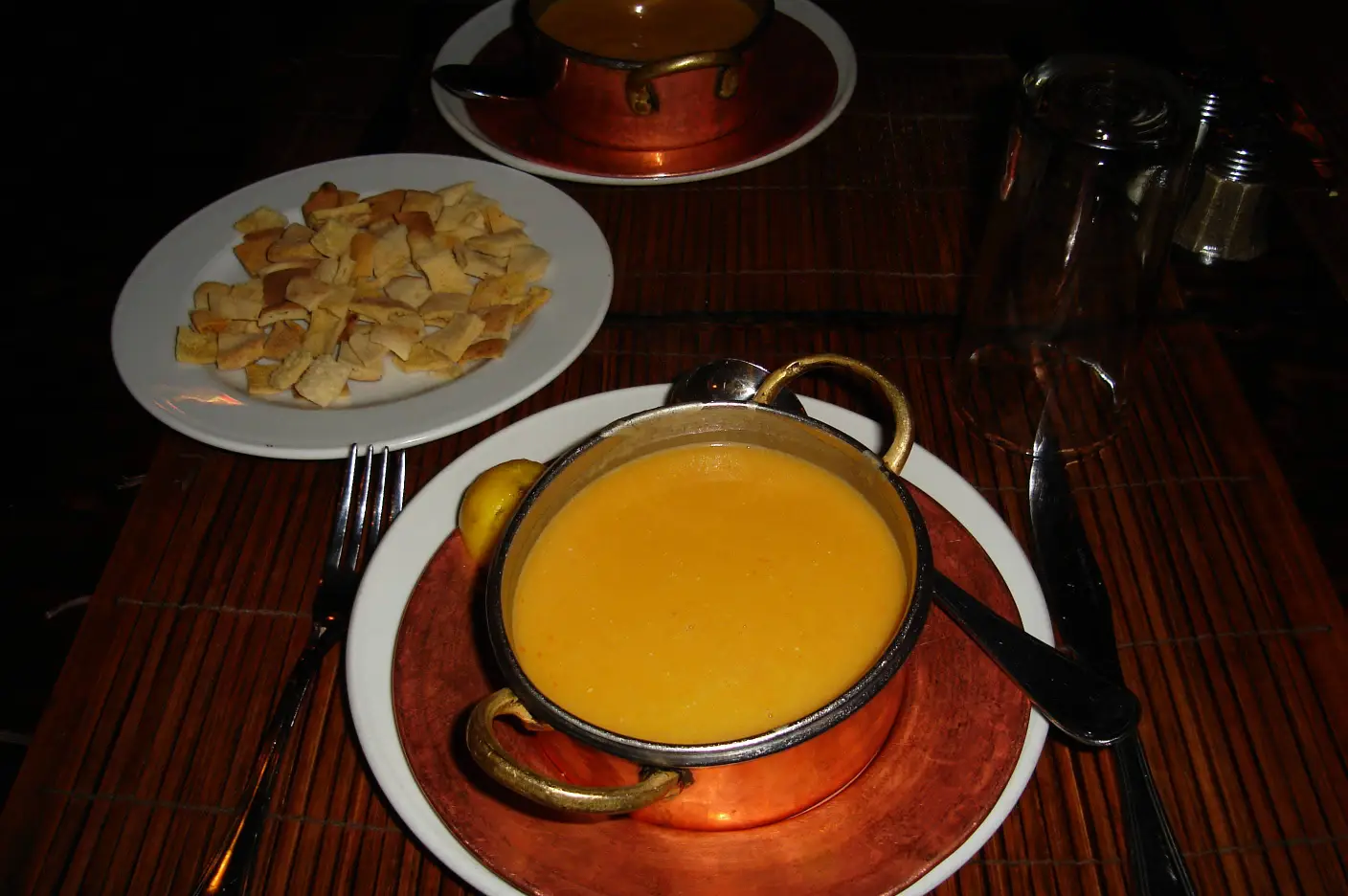
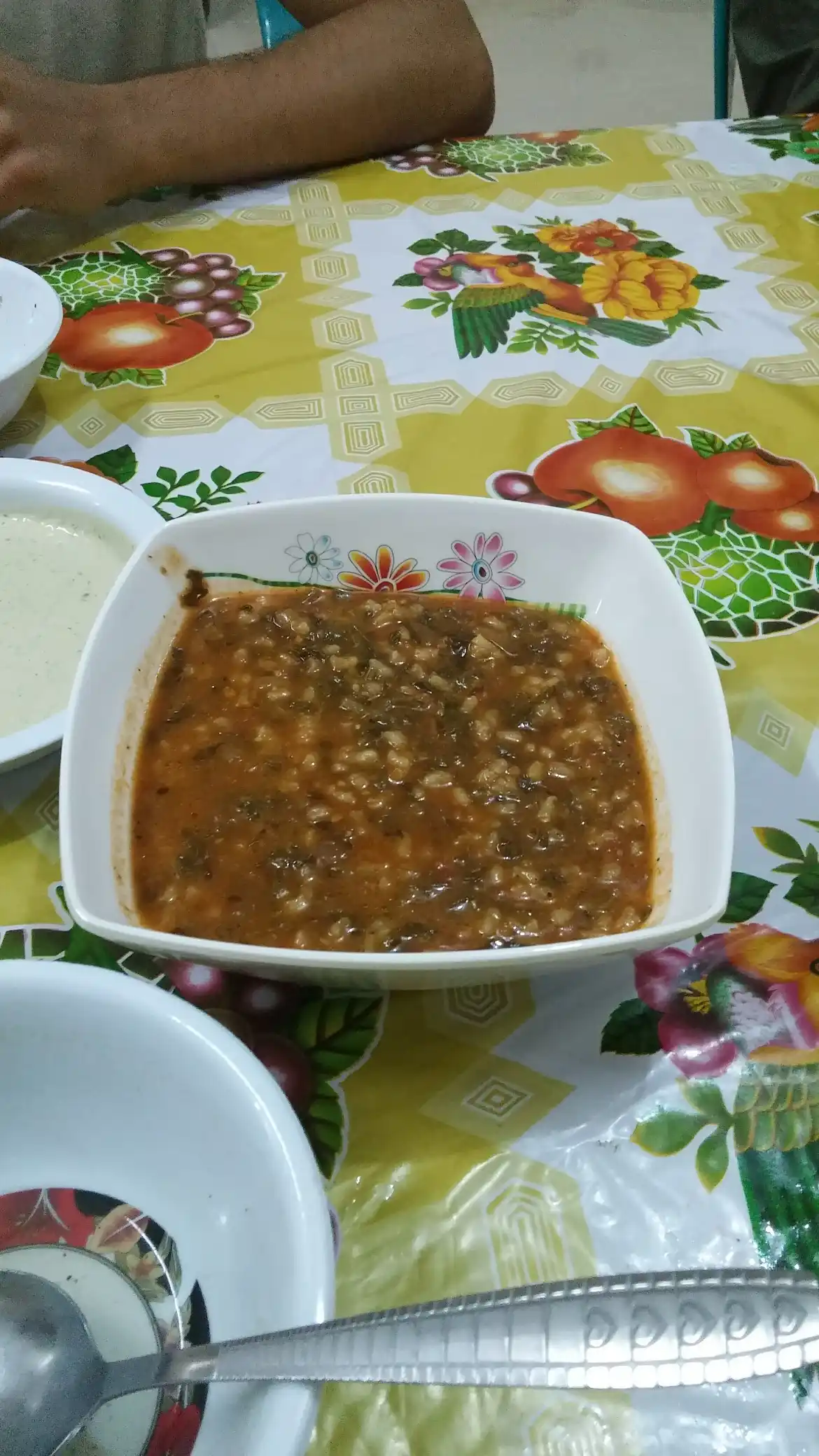
Lentil soup in an Egyptian specialty. Be sure to squeeze lemon on top!
Most lunches and dinners are accompanied by veggies cooked in a tomato-based sauce
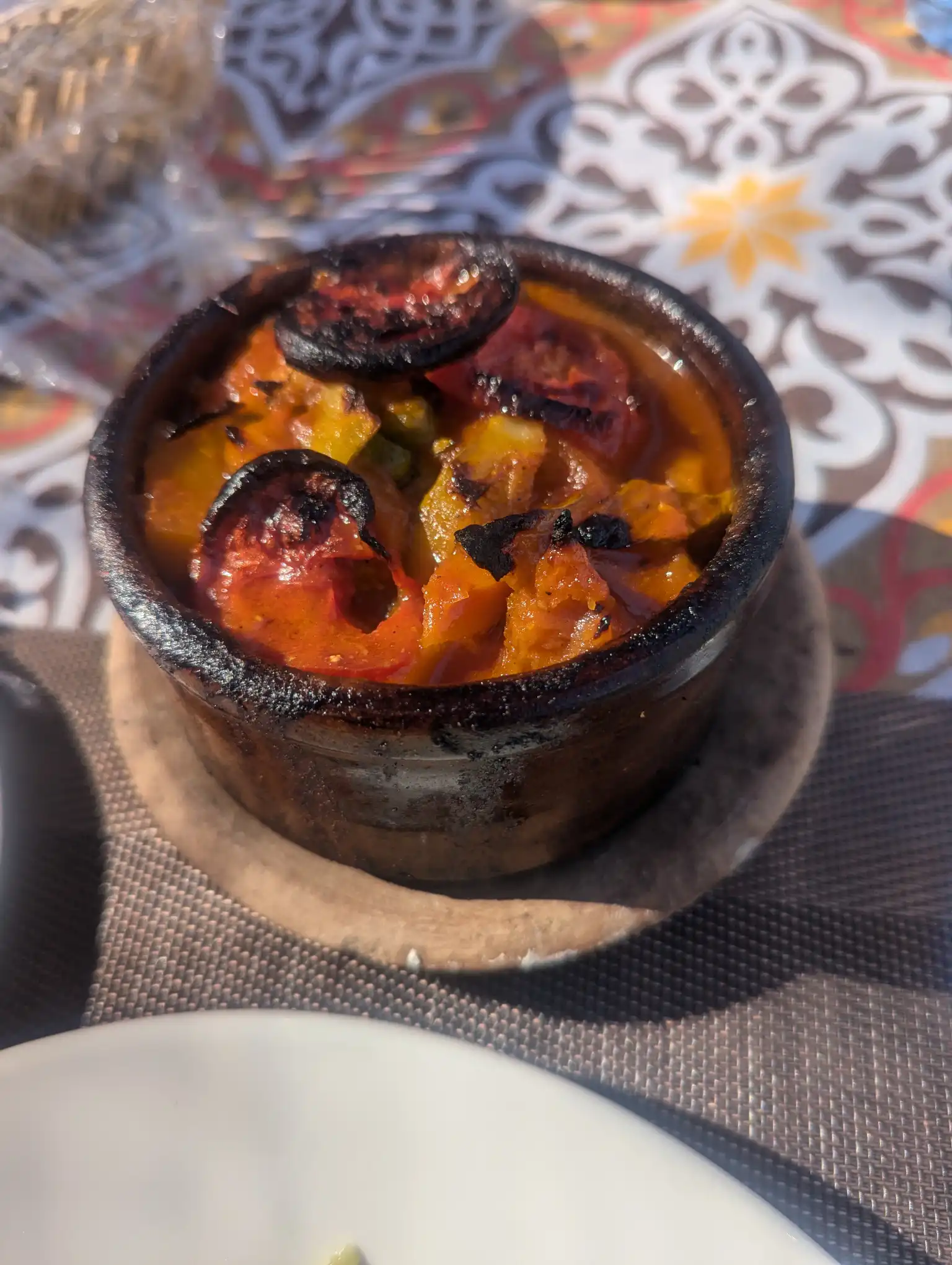
A tomato and potato casserole
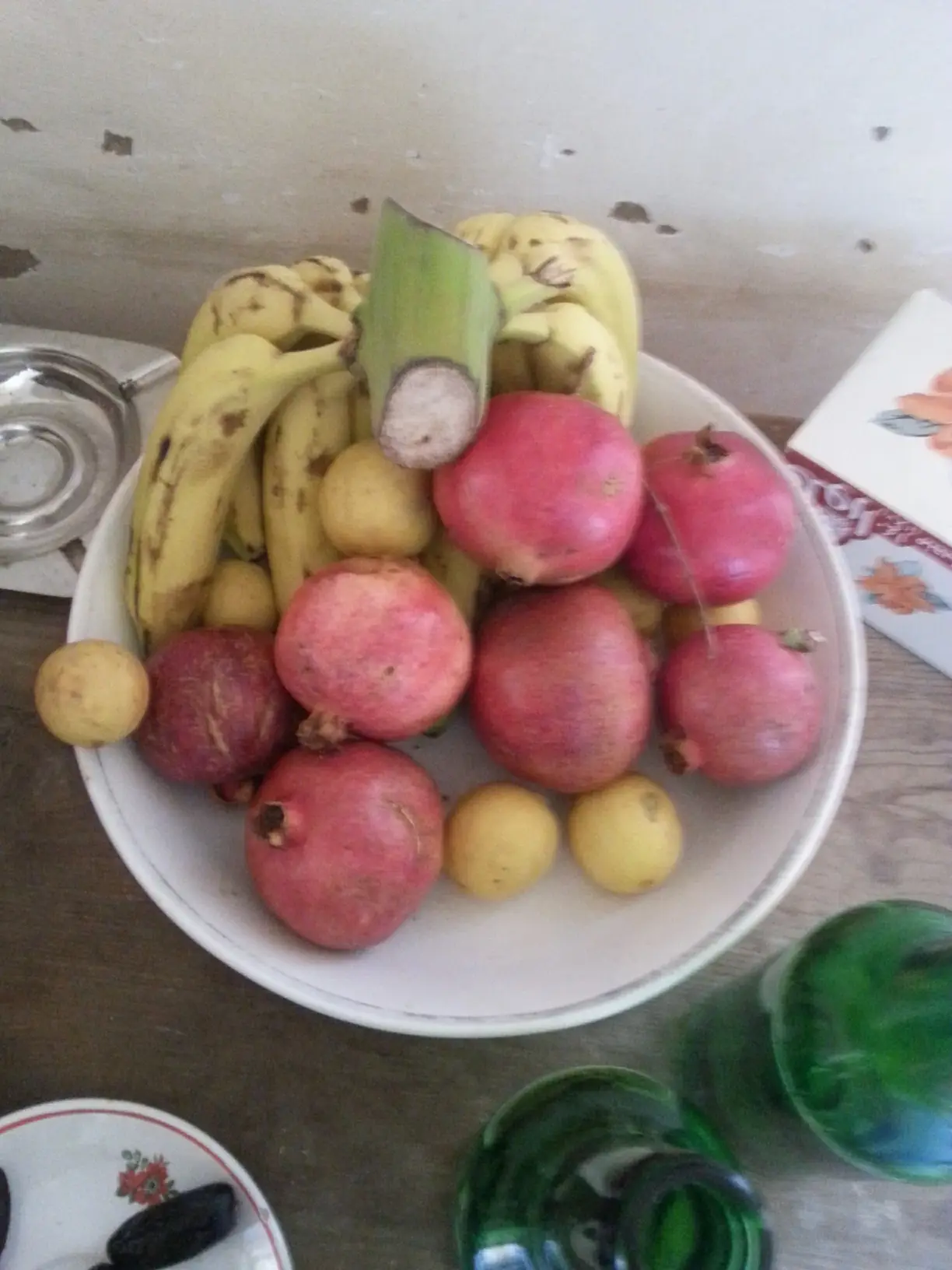
Pomegranates and guavas are not to be missed!
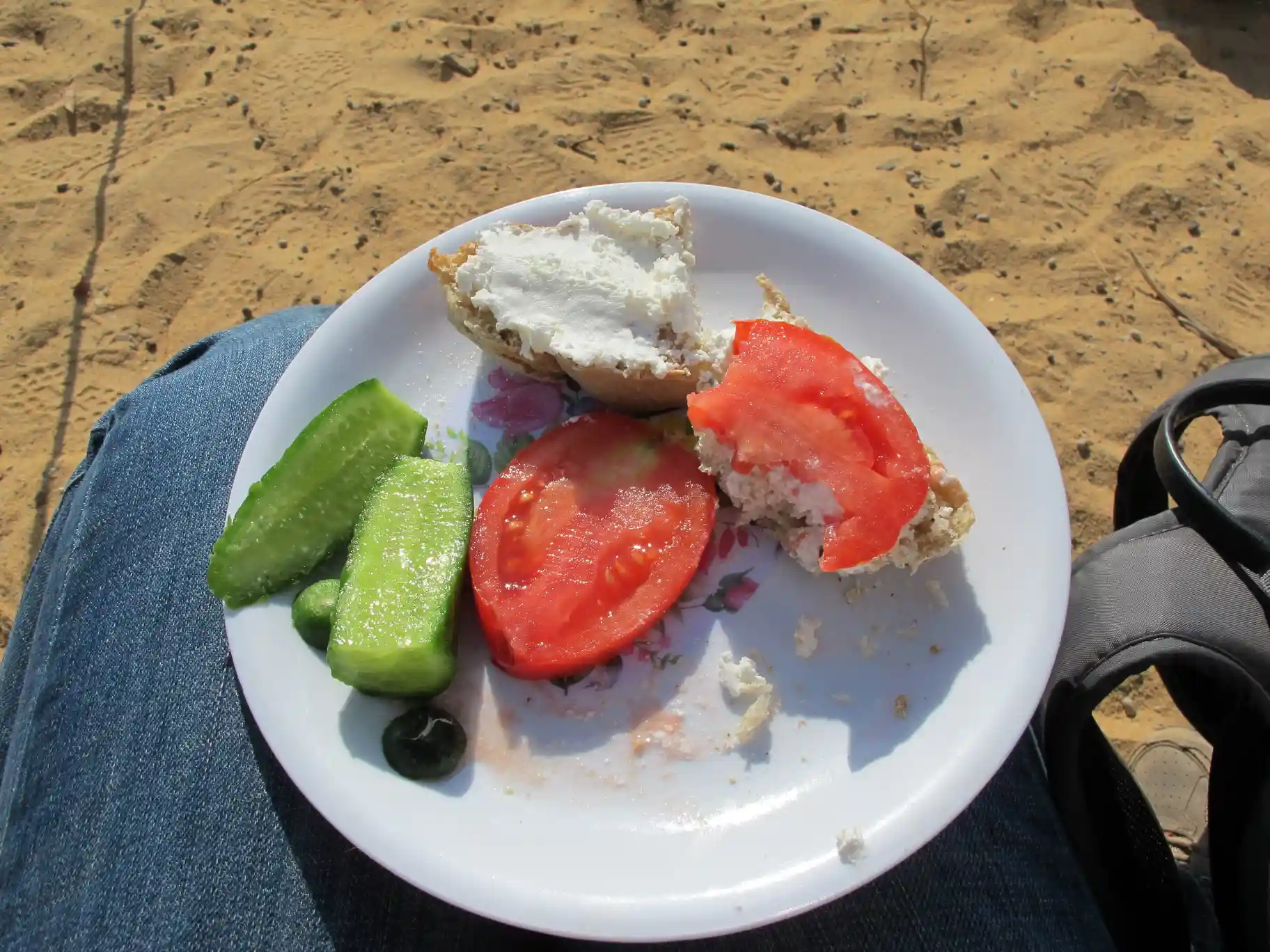
Cucumbers, tomatoes, Aish Shams, and soft white cheese, what else do you need?
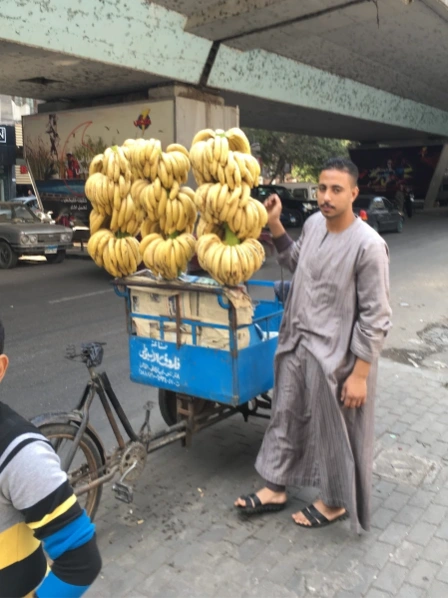
Bananas are a great grab and go snack widely available across Egypt
The fruits and vegetables are also amazing. Tomatoes and cucumbers are usually served with every meal, often as salata baladi, Pomegranates and guavas are in season in the fall and much cheaper than in the U.S., so be sure to try those, fresh or in a juice.
It is always good to ask and confirm that your meal is vegetarian, but you shouldn’t have any trouble.
At the end of the day, eating your way through Egypt is one of the best parts of a trip!
What do you think?
Have a question about eating in Egypt, or a favorite dish I left off?
Leave a comment below!
Want to Visit Egypt?
If you’d like to taste it all for yourself with an archaeologist along who knows exactly where to stop for the good Taameya, come explore Egypt with me.